Category: News articles

Martec’s Johannes Coetzee receives SAAMA’s Individual Achievement Award

Recognising the efforts of asset management professionals, the Southern African Asset Management Association (SAAMA) has announced Johannes Coetzee as the 2020 Individual Achievement Award winner.
“SAAMA is the pivot point for asset management in Southern Africa. To get this award from such a prestigious association is an honour. I’m passionate about asset management and to get my efforts recognised is the cherry on top,” says Johannes.

Looking at his resume, it is easy to see why this honour has been bestowed on Johannes. Some of the prestigious designations he held include president of SAAMA and vice chairman of the Global Forum on Maintenance and Asset Management (GFMAM). Johannes also represents SAAMA’s interests at the World Partners in Asset Management and serves on the advisory board of the Department of Industrial and Systems Engineering at the University of Pretoria. In these positions, he provided leadership and guidance in the development of significant industry structures and standards and helped raised the profile of the industry across the globe.

During his tenure at Pragma, Johannes participated in developing several innovative practices and new services. Most notably, he assisted in setting up one of the first outsourced maintenance management services in South Africa. His work then and now as managing director of Martec, has allowed him to help define valuable standards, qualifications, tools and assets used to serve clients both in Africa and abroad.

“Johannes always seeks to make a constructive contribution to the companies, organisations and people he works with. He is quick to recognise a need or development opportunity and uses his technical expertise, leadership capabilities and network to bring innovative solutions to the table,” says Pragma Chief Executive Officer Adriaan Scheeres, who nominated Johannes for the award.

We want to congratulate Johannes Coetzee with this achievement and trust that he will perform his duties with grace and use his strengths to make the most of this opportunity to further the physical asset management agenda.

Founded in 1997, SAAMA is registered as a non-profit organisation focused on highlighting the role of physical asset management as a key contributor to long-term business success. SAAMA does this by building synergistic rapport between companies and industries, encouraging the interchange of information, ideas and knowledge, contributing to the development of standards and practices, establishing, maintaining and improving common standards, stimulating and promoting education, training and original research by its liaisons with similar associations locally and internationally.

For more information about SAAMA and their activities, visit, www.saama.org.za

SonaVU™

Changing the paradigm of ultrasound inspections with SonaVu™

We are very pleased to introduce the South African market to the SonaVUTM. SDT has once again produced a groundbreaking product that will not only greatly enhance your hearing but as you will find out in the rest of the article, combine your senses to take ultrasound inspections to the next level.

SonaVU™
SonaVU™

How Does Super-Human Hearing Look?

SonaVu… Powered by SDT, is a multi-frequency sound camera that takes airborne ultrasound inspection to a whole new level. Equipped with 112 highly sensitive sonic sensors and a precision optical camera, SonaVu brings the power of super-human hearing into focus on its vibrant, colour touch screen. While unlocking limitless applications for asset reliability, energy conservation, and safety.

Designed to work in the noisiest, harshest environments, SonaVu hears and sees ultrasound simultaneously even during peak production times. Capture images or videos detailing the exact location of leaks, electrical discharge, and other mechanical anomalies. SonaVu’s internal memory stores them for easy report building and follow up repair actions.

Make SonaVu an integral part of your compressed air leak management and electrical inspection programs.

Applications for SonaVu™

Compressed Air Leak Management

Ultrasound is the technology of choice for conducting compressed air leak surveys. The distinct hissing sound produced by turbulent flow at the leak site has peak signals at 36-40kHz. The convenience of conducting leak surveys during peak, noisy production times leaves no excuses for energy waste from this expensive utility.
The added capability of visual reporting makes SonaVu a powerful ally for energy conservation and environmental sustainability initiatives.

Compressed Air Leak Management

Electrical Asset Reliability

Each year millions of dollars in productivity are lost to electrical asset failures related to partial discharge. Worse than that, workers are badly hurt or killed on the job by unexpected fires, explosions, and arc flashes. Electrical asset reliability must be taken seriously.
Ultrasound inspection is well-suited for detecting surface discharge as well as those located behind unsealed panels. SonaVu blends the power of ultrasonic detection with the convenience of visual reporting. Quickly scan substations, transmission and distribution lines, as well as switchgear cabinets. The presence of partial discharge in the form of arcing, tracking, or corona is both heard and seen by SonaVu’s dual-sensing technology.

Electrical Asset Reliability

Combining Senses

Combining Senses
Combining Senses

The combination of a visible camera and multiple arrayed sonic sensors creates a new condition monitoring technology class with still untapped potential. SonaVu makes the power of ultrasound inspection a visual reality.

For more about SDT’s product ranges, visit our Products page here.

Generator

Is your power backup investment failsafe when Eskom load shedding strikes?

A wave of load shedding is hitting the country again, as you would have experienced, no doubt. This has resulted in incidents where service providers such as OR Tambo International Airport, Chris Hani Hospital and many others have been unable to operate at full capacity. We ourselves have suffered a generator failure at our head office, at a highly inconvenient time. These events prompted us to have a critical look and think about what should be in place to ensure a reliable backup when the inevitable will occur. After all, even backup plans need maintenance.

A couple of our pragmatic engineers put their heads together, and came up with the points below. The bad news is that there is no app for your smartphone that will do the job for you. The good news is that if you apply yourself to the suggested actions, you can have more peace of mind when the next load-shedding hits.

Before you lift a finger, or grab a meter, it is important to get a little (but good) understanding of the real-life situation. In any case where you want to ensure predictable, reliable operation of a thing (be it machine, computer, or even a human) you should know:

  • What are the critical functions you expect from the thing?
  • What is the critical component that will affect this function?
  • How likely is that component of the thing to fail?

In this case, the “thing” under discussion is a standby electrical power generator set, aka genset. For such a genset, the answers to these questions are quite simple, and illustrated in the figure below.

Function Components Failure likelihood
Detect primary AC failure Voltage sensor; actuated switch Low
Start the engine Battery, starter motor, engine ignition, fuel High
Run engine for 2 hours Engine, cooling, lubrication, fuel supply Medium
Generate electrical AC Alternator, regulator Low
Switch supply connections Transfer switch Low
Illustrated generator

To ensure good reliability and effective delivery of standby power from your diesel or petrol-powered genset, here are some useful simple tips to bear in mind when caring for such an asset:

  1. Ensure that all fluids in the machine are kept at the correct levels:
    • Coolant level is between minimum and maximum on level indicator
    • Oil level is between minimum and maximum on dipstick or sight glass (do NOT overfill)
    • Fuel level is between 75% and 100% of tank capacity. This reduces the possibility of condensation absorption into fuel, as well as the risk of premature depletion
  2. It is vital that the batteries, used to start the generator engine, are always fully charged. This is ideally confirmed by measuring the voltage of the disconnected battery to be > 12.6 VDC (for each 12V unit). Furthermore, battery electrolyte, for maintainable units, should always be at the correct levels in each cell of the battery set. For sealed maintenance free (SMF) units, the visual indicator should be (positive) green.
  3. Ensure that the AC mains power failure detection system as well as the automatic transfer switching (ATS) system is functional and is switched into the AUTO RUN or equivalent mode at all times.
  4. For gensets that switch on and transfer power automatically, and especially larger sets (100 KVA and more), it is essential to keep the engine oil and coolant at an elevated temperature, typically above 45°C. This ensures immediate loading capability of the generator, without having to wait a few minutes for engine warm-up.
  5. Do regular visual inspection to ensure that all cooling system air ducts, inlet filters, radiators and extraction fans are clear of dust and debris. Air filter units should be regularly checked for blockages (check filter air block detectors where used).
  6. Do regular visual inspection for signs of fluid leaks or seepage. If any found, ensure that rectification is promptly done, before leaks become excessive.
  7. Ensure adequate fuel reserves immediately available and fuel refilling is easily possible without spillage. Consider day tanks, hoses, filler fittings, transfer pumps, spare fuel drums, drum trolleys).
  8. During testing, ensure that when engine is started up, it is not run longer than 10 minutes without load. If started up, it is preferable that the engine is run with a load, for a minimum of 30 minutes, observing temperatures, pressures, cooling and signs of fluid leaks. It is essential that a genset gets regular exercise.
  9. In the longer term:
    • Simulate AC Mains failures at recommended intervals and ensure that the Mains/Generator/Mains switch-over cycles fully complete their functions.
    • During simulated AC Mains failure tests, ensure that the engine starts immediately and smoothly takes up the load, while observing for signs of labouring due to possible overloading (excessive diesel smoke, under voltage, machine not achieving rated engine speed).
    • It is a good practice to have the generator serviced annually, or every 200 operating hours, by a reputable competent specialist service provider.
    • Plan and budget to pro-actively replace battery packs every two to three years, depending on the climatic conditions/exposure to high ambient temperatures.
  10. From a generator sizing and design point of view, ensure that the genset is not electrically overloaded during start-up and continuous running. Review the load configuration regularly to further ensure that load circuits have not crept up, and that phase balancing is maintained.

Lastly, but possibly the most important aspect to have assurance of asset reliability, is the disciplined adherence to your adopted maintenance and asset care programs. This often has to fend against operational and political pressure, but should never be compromised. Good mechanisms to support this, are clear service level agreements and computerised maintenance management systems.

Electrical switch gear

Avoid extended downtime due to inadequate preparation prior to start-up after lockdown

Evaluate the risk the shutdown posed to Critical Electrical Equipment (CEE) before you start up your plant after lockdown.

During normal circumstances, a plant shutdown is a thoroughly planned event where several processes are precisely orchestrated to take equipment out of service, maintained and then meticulously returned to service. This process is usually conducted by highly experienced engineers who understand the hazards posed to equipment, people and the environment. Specialised tools, such as condition assessment and monitoring equipment, are crucial to these engineers’ toolsets.

In exceptional cases, like the Covid-19 lockdown, some industries had to hastily shut down without the normal time required to plan and execute shutdown processes properly.

Where the necessary shut or preservation scope was neglected for motors, cables, transformers and switchgear, which are the most commonly used electrical assets in industrial plants, a prolonged period of inactivity could deteriorate and harm several components and impact on the reliability and safety thereof.

Failing to follow the required inspections and testing processes prior to re-energising equipment may result in extremely hazardous conditions that cause severe damage to the equipment, extended plant downtime or could even lead to fatal flashovers.

Unpacking the risk and mitigation

One of the most common electrical failure modes is a flashover due to compromised insulation. Thus the early detection and identification of deteriorating insulation is a key predictive maintenance tool to address this problem. The different stresses that increase the rate of insulation degradation can be summarised into the TEAM Stresses:

Thermal | High thermal stress during the start-up process deteriorate insulation systems until failure

Electrical | Poor electrical installations are the number one cause of failure

Ambient | High operating temperatures and moisture ingress contribute to failures

Mechanical | Poor electrical contacts can add to premature failures

Performing routine commissioning or pre-energisation assessments are imperative, and techniques such as insulation resistance, polarisation index and oil analysis are some of the more well-known assessments. During energisation, the best method to determine the impact of TEAM Stresses is with on-line partial discharge technologies.

Following are examples of the typical risk conditions encountered after prolonged periods of inactivity on High Voltage (HV) and Medium Voltage (MV) equipment, and specific condition monitoring techniques that can be used to identify these conditions.

Medium Voltage Switchgear

Electrical switch gear
Electrical switch gear at Low Voltage motor control center cabinet in coal power plant. blurred for background.

MV switchgear that is used in hostile environments can be exposed to various corrosive contaminants, which damage both the insulation system and metal components (including the internal components of breakers). During out-of-service conditions, they tend to gather dirt, moisture, contaminants and even vermin, which can lead to flashovers and protection failure.

Visual inspections and condition assessment using handheld or advanced on-line technologies should be conducted after racking the breaker into position, just before switching activities to resume.

Once the incomer switchgear breakers are returned to service and no electrical anomalies are identified, the rest of the switchgear breakers can be returned to service by gradually stepping up the load to full normal load. This reduces the risk of simultaneous large loading within the power circuit and high starting currents, voltage dips and protection trips or failure (arc flash).

Transformers

Oil-filled transformers are commonly used in plants, and their oil provides an insulation medium as well as cools the transformer. These transformers have sealing systems to prevent the oil inside the transformer from coming into contact with air and moisture that contaminates the oil and cellulose insulation and ultimately deteriorates the insulation properties. Moisture generally enters through leaking gaskets, cracks or seals, accelerating the deterioration of insulation. This results in 90% of all preventable bushing failures, reduces the useful life of the transformer and can lead to explosive failures, causing extensive damage to the transformer, surrounding equipment and buildings as well as endanger people’s lives.

During prolonged periods of inactivity (or long periods of not being energised) the transformer cools down, allowing the moisture that is otherwise suspended in the oil to condensate from the oil and compromise the insulation system.

Visual inspections should be conducted to check for rust, leaking gaskets, seals, cracks, correct oil levels and to evaluate the colour of the silica gel. Oil samples should be taken and analysed if leaks are identified during the visual inspections. Based on the results, the needed corrective action should be planned that could range from drying the oil to more advanced repairs.

While returning the plant to service, loading on the transformers must be gradually stepped in, to reduce the probability of failure caused by higher moisture content at low temperatures. This failure frequently appears post shut periods where loads are not stepped in.

Detailed oil analysis forms the cornerstone of managing reliability on oil-filled transformers and could be complemented with technologies such as ultrasound and thermography in monitoring bushings and cooling systems. It is advisable to implement an in-time monitoring solution for Dissolved Gas Analysis (DGA) on critical and/or ageing oil-filled transformers in order to trend the health and prevent premature failures that could be missed by normal oil sample frequencies.

MV and HV Motors

Motors are the most common electrical assets used in industrial plants and mining operations, and they often play an essential role. If a critical motor fails, it can result in a variety of safety hazards and costly downtime. Motors often fail during start-up, so they must be in a good state before they are brought back into service. The most prevalent failure mode on motors is bearing-related and can include worn bearings, bearing housings or shafts. Contamination can also cause binding. Before energising motors, the best practice is to check all lubrication systems and oil levels to ensure that they comply with desired standards.

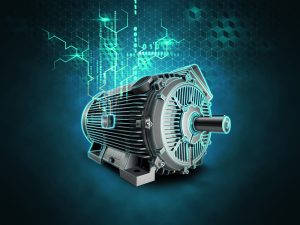
Neues IoT-Motorenkonzept für höhere Verfügbarkeit und gesteigerte Produktivität / New IoT motor concept for greater availability and increased productivity
Auf der diesjährigen SPS IPC Drives zeigt Siemens live die Konnektivität von Simotics IQ, dem neuen IoT-Konzept für Simotics Motoren.
At this year’s SPS IPC Drives, Siemens is demonstrating the connectivity of Simotics IQ, the new IoT concept for Simotics motors.

Secondly, a minimum requirement is the verification of the winding insulation integrity on MV and HV motors by performing a polarisation index test.

Thirdly a visual inspection of power cables and terminations are done to ensure that the correct connection criteria are applied, and no insulation damage is visible. Cable theft is a problem in some areas, in particular when the cable is not energised or the plant is relatively quiet in terms of employees moving about.

If an MV motor can’t be tested off-line (polarisation index test), an on-line assessment with advanced condition monitoring technologies (i.e. partial discharge) is recommended during energisation. Engineers use the data derived from the advanced on-line assessments on the cables, terminations and winding insulation systems to determine the MV motor insulation health.

A motor’s lifespan can further be extended with the integrated use of condition monitoring technologies such as vibration, ultrasound and thermography. A holistic view of the motor’s condition (cooling system, bearing hot spots, etc.) can help detect several problems before they start to create serious damage. It is a worthwhile investment to consider.

MV and HV cables

Cables that cool down due to the full termination of energy, or reduced current capacity, tend to attract moisture through any small imperfections within the outer insulation system. This is more likely to occur with PILC cables that uses paper as main insulation compound and sometimes even XPLE cables.

During start-up, the inrush currents drawn by the equipment connected to the cable can cause underlying defects to result in a complete cable failure and pose a significant safety hazard that will most probably result in prolonged downtime.

It is strongly recommended that a number of tests are conducted to ensure that cables are intact before commencing with re-energisation. A VLF test (using SANS 10198-13_2016) is performed on critical incomer feeder cables prior to re-energisation to ensure that the cable is electrically sound and that no sections are missing due to theft. VLF (pass/fail test), Tan Delta and Partial Discharge assessments are done to confirm, amongst other, the quality of electrical insulation, the degree of deterioration of shielded cable insulation caused by contamination, damage or water tree and the possibility of a flashover.  Used complementary to each other, it is possible to determine the overall health and condition of critical cables before resuming service safely.

During downtime, higher moisture content may be present in cables due to lower temperatures and can potentially result in failures once re-energised. When returning the plant to service, electrical loading on the cable must be ramped up in phases over an extended period to validate system behaviour. This is known as “soaking” the cable or soak testing. On-line condition assessment with advanced technologies can also be used to verify any partial discharge activities within the accessories and feeder cables to detect and prevent potential failures.

What to do? Checks and assessments

During the shut period, several best practices must be adopted on MV/HV electrical equipment, such as:

  • Keep motor space heaters on to prevent adverse moist conditions affecting the winding condition.
  • Rotating machines with heavy shafts must be rotated periodically to prevent shaft bow. Put measures in place to prevent bearing corrosion.
  • Keep switchgear energised with humidity and temperature monitoring.
  • Inspect transformer breathers, with a specific focus on the silica gel colour, as moisture ingress may result in catastrophic failure (during shut and before start-up).
  • Introduce measures to prevent vermin and contamination entering equipment.

Before commencing the return of equipment to service, the following pre-start-up checks and assessments are required:

  • Inspect cable joints and terminations for moisture ingress, insulation deterioration and confirm the correct torque settings on connections (where applicable).
  • Verify that the earthing system is still intact (in particular as the copper is prone to theft in some areas).
  • Perform off-line VLF, Tan Delta and Partial Discharge (PD) assessments on critical electrical infrastructure.
  • Inspect transformer breathers, with a specific focus on the silica gel colour, as moisture ingress may result in catastrophic failure

During start-up the following is important:

  • It is important to have a well-documented sequential step by step start-up procedure that will mitigate the risks posed
  • The energisation of the installed electrical plant should be gradually stepped up to full normal load
  • Perform on-line PD assessments once the start-up process has commenced ensuring correct operation.

Although industries are now pressed for time and eager to return their operations to full service, it is advisable to carefully consider and apply mentioned best practices to ensure the reliable and safe commissioning of equipment.  It is further recommended to partner with experts that can develop a full return-to-service scope based on your plant’s specific risks and that can perform the identified assessments and preventative tasks under quality-controlled processes.

It is recommended to partner with an expert that can develop a full return-to-service scope based on your plant’s specific risks and that can perform the identified assessments and preventative tasks under quality-controlled processes.

For more information, please contact Martec at info@martec.co.za.

Switchgear Monitoring

The step-change from reactive to predictive condition monitoring

Condition monitoring has gained prominence over the years as equipment owners continually prioritise asset utilisation and productivity. For condition-based maintenance to be possible, it is essential to have knowledge of the machine condition and its rate of change with time. Thus the main function of condition monitoring is to provide this knowledge, Munesu Shoko.

The crudest way of operating machines is to run them until they fail, and then try to repair them in order to make them fit for further service. This method of operation can be very costly in terms of lost output and machine destruction, and in addition can involve hazards to personnel. It is now well recognised that, particularly in the case of large and expensive plant, it is more economical and operationally satisfactory to carry out regular maintenance.

Just how important is condition monitoring in optimising asset utilisation and productivity? The main savings which can be made by the application of condition monitoring to industrial machinery arise by avoiding losses of output due to the breakdown of machinery, and by reducing the costs of maintenance.

Lourens Zeelie, online condition monitoring specialist at SKF Group, says the importance of condition monitoring has gone from an optional, nice to have, to a requirement on new plants. “Asset utilisation and productivity can be significantly increased by knowing the condition of the asset. Preventative measures can be taken to prevent failures. Similarly, assets can be utilised for much longer by knowing the exact condition and at what point it is expected to fail,” says Zeelie.

Arveen Gobind, asset reliability executive at Martec, says condition monitoring is fundamental in assisting asset owners to determine the condition of their assets and improve reliability and availability. “Condition monitoring provides information specific to an asset, which is used as input to predict potential failures and a proactive approach to maintenance,” says Gobind.

James Cowling, CM product advisor at Martec, says assets that remain in good condition will ensure that the designed process that they are serving is in an optimised state. “Knowing the condition and the risk status of your assets enables better production decisions. For example, defects on a pump that are identified by using ultrasound and vibration can help the production team to make an informed decision to avoid further damage on the main pump instead,” says Cowling.

Gobind adds that condition monitoring systems further give advice on improvement areas, which allows maintenance/repair time to be allocated accordingly and with a more defined scope.

Growing trend
Available industry figures show that the global use of predictive maintenance has risen from 47% to 51% in the past five years, while running equipment to the point of failure has dropped from 61% to 57% during the same period. What is the state of affairs locally? Zeelie says there is definitely an increased interest in predictive maintenance systems. He reasons that on some new plants it has become a requirement in the design phase that assets be equipped with the necessary monitoring equipment.

“Existing plants also show an increased interest due to tight budgets and high production requirements which do not allow for unexpected downtime or maintenance. Despite the rise in interest, some existing plants are not yet willing to commit to the capital costs involved in installing a monitoring system,” says Zeelie.

Cowling says over the last couple of years, the traditional view that condition monitoring is primarily applicable to rotating devices (bearings, gearboxes pumps and fans, among others) has changed. “With the continued improvement in technology, sensors and condition monitoring applications, we see significant growth in electrical condition monitoring on MV switchgear, cables and transformers,” says Cowling. “These are critical assets to many of our clients and just as strategic as the large mechanical equipment assets. Plant owners are thus now in a position to improve overall equipment reliability, resulting in sustainable plant integrity.”

Gobind adds that the rapid expansion of condition monitoring technologies and the integration with IIoT applications is further evidence that companies see the benefit of condition monitoring as a primary technology to optimise asset utilisation and productivity. “Constant economic pressure forces asset-intensive organisations to work smarter to avoid costly breakdowns that hamper production and service delivery and ultimately reduce the useful life of their assets. By predicting failure modes and applying corrective actions, asset owners reduce the risk of failures and high repair costs while extending reliable asset life,” says Gobind.

Towards smart management
Machine condition monitoring has made its evolutionary turn towards smart asset management. Cowling says historically the primary condition monitoring tools were vibration, tribology (oil sampling) and in some cases thermography (infra-red technology).

“This was traditionally performed as a service or periodically by using handheld equipment or in some instances installing permanent sensors on critical or strategic assets. However, the condition monitoring data was not always accurately captured or immediately made available for the plant engineer to utilise,” says Cowling.

According to Gobind, with the onset of IIoT, the significant technological changes are being able to connect condition monitoring sensors (vibration, temperature, DGA, moisture, debris, energy, impact, among others) to web-based agnostic edge processing devices that allow the client to see the condition of their asset in real time and online.

“At Martec, we launched a new service called the Reliability Nerve Centre (RNC). The RNC is an online monitoring solution where key parameters are selected and monitored, and which provides insight into the assets condition and risk, related to defect development and potential asset failure,” says Gobind. The data obtained from the monitored parameters is turned into useful information, utilising engineered algorithms. The algorithms even provide automated digital notifications with recommended actions based on failure modes to improve reliability and availability.

“We also perform advanced diagnostic analysis on critical alarm levels – being significant deviations or breached thresholds. This is a huge benefit as more than one parameter is usually monitored on a critical asset, which requires an expert’s understanding of when the combined result of these parameters require the asset to be pulled for maintenance. Such informed interventions are vital in the prevention of unplanned outages that could result in significant production and financial losses for the organisation,” says Gobind.

Zeelie says SKF is involved in some large projects aimed at smart asset management. Inputs from multiple systems are combined at a central point for analysing. With the available information a very good understanding of the asset condition can be achieved.

“With this information available, preventative maintenance strategies can be put in place. In the long term it can be possible to determine whether it is maybe more feasible to replace the asset rather than doing maintenance. The aim of this is to have the most efficient plant running at the lowest, most feasible, cost,” says Zeelie.

The rise of AI
Artificial intelligence (AI) in machine condition monitoring is said to be gaining ground. Zeelie says AI is much spoken about and definitely being explored. He is of the view that it is not yet at a stage where it can be implemented without human intervention. “Currently available systems rely on algorithms and mathematics to simplify the diagnostic process for humans. Condition monitoring, especially Vibration Analysis, is a complex field that still requires human interpretation. Existing systems can however alert humans to possible defects,” says Zeelie.

Cowling says AI and Machine Learning are going to play a significant role in the asset management realm in the future. Currently, the bulk of analytical data processing, diagnostics and reporting in many cases are still assessed by subject matter experts. However, there are already some of the basic fundamental condition monitoring signatures or thresholds, which with engineered algorithms have been developed to provide automated failure mode identification, resulting in the appropriate corrective action being recommended.

The analytical models and algorithms behind AI, in some cases, can require a significant amount of condition monitoring data to be developed and fine-tuned. With the deployment of more online solutions and IIoT based CM applications, the speed at which this data is being generated and analysed to speed up the research and development processes will significantly reduce the timeframe to implement AI in machine condition monitoring applications.

Over time the implementation of AI models and algorithms may progressively replace some of the more basic analytical work currently being performed by condition monitoring practitioners. “However, during this initial development, we predict that the subject matter experts will stay in demand to address consultative issues,” says Cowling.

“At Martec, our RNC currently has automated algorithms running to provide warnings and alarms to clients via SMS or email and as we continue to gather more data as part of our research and development programme within the larger Pragma group, we will look to introduce our own AI platforms and provide these to our clients as part of a larger reliability centred asset management solution,” adds Gobind.

Different types
The condition monitoring equipment market is segmented by product type, for example, vibration monitoring equipment and lubricating oil analysis equipment, among others. According to Zeelie, the most prominent type of condition monitoring is Vibration Analysis. Another important method is Lubrication Analysis.

“When monitoring an asset, defects will first be picked up by Lubrication Analysis. Many plants do Lubrication Analysis based on a schedule and manual sampling. However, online lubrication analysis systems are also available. SKF offers online Lubrication and Vibration Monitoring systems, but commonly only receive enquiries for online Vibration Monitoring systems. It must be noted that online lubrication analysis can only be done with oil, which is only used in special applications where grease cannot be used,” explains Zeelie.

SKF has a full range of online condition monitoring systems, including a protection system for critical assets such as turbines. There are also different sensors for the different applications ranging from Accelerometers to high accuracy Eddy Current probes.

Gobind says historically in local markets, the bulk of condition monitoring technology in the industrial and mining sectors has always been dominated by mechanical applications, focusing on mechanical systems due to their higher failure rates, hence vibration, tribology and thermography are still very popular.

“In the last few years, the introduction of ultrasound as a new complementary technology to existing condition monitoring programmes has been growing and used for different applications and not just purely mechanical or rotating equipment and applications ( bearing lubrication control, compresses air leaks, MV electrical substation, hydraulics, pneumatics and valve applications),” says Gobind.

Cowling adds that condition monitoring of medium and high voltage electrical assets in the power generation, transmission, utilities and mining sectors has been growing at a steady pace. Asset owners are looking to monitor their electrical networks and assets due to the adverse effects of failure resulting in significant financial loss and personnel safety. “Condition monitoring applications related to electrical assets such as transformers, switchgear, cables, generators and motors, among others, has continued to expand and grow,” says Cowling.

“IIoT will continue to drive condition monitoring applications and technologies, and as more companies look to digitise and implement IIoT as part of their Smart Asset optimisation drive, more equipment and assets will have condition monitoring sensors or systems installed,” reasons Cowling.

“At Martec, our primary focus is to assist our clients to improve the reliability and availability of their assets. We provide CM sensors, monitors, products, services and in-time online monitoring solutions for nearly all asset and plant types,” concludes Gobind.

First published in the Capital Equipment News.

Graphs

Martec launches two exciting new services.

Asset Health Portal and Reliability Nerve Centre to complement service offering.

Condition Monitoring specialists Martec have announced two new services to complement their range of Condition Monitoring (CM) solutions. The Asset Health Portal and Reliability Nerve Centre (RNC) will form the backbone of their in-time monitoring services and reliability improvement initiatives, in support of sustained plant integrity.

Managing Director Johannes Coetzee explains that, traditionally, most CM companies would support clients’ needs by selling handheld CM assessment tools with training related to the application of the tools. In some cases, they would also offer a service where they take samples and data (of mostly mechanical phenomena) at a set frequency on behalf of the client. The data would then be presented as a static report, but because this is a one-sided interpretation, many such reports never get the necessary attention or action.

Coetzee continues: “We enhanced this model by adding specialised electrical CM assessments (eg Partial Discharge, Dissolved Gas Analysis, Power Quality) on critical plant assets such as transformers, switchgear, large motors, large generators, and HV and MV cables, and by performing quality assurance inspection plans before the commissioning of these assets. The latest addition to our offering is the in-time CM monitoring service which is backed by the Asset Health Portal and RNC.”

Coetzee says that advances in the IIoT and sensor technology have made it cost effective to acquire the full set of trending and diagnostic data required to run an effective CM programme on critical assets, whilst also mitigating the health and safety risks and eliminating inaccurate data acquisition practices that result from manual collection of data.

Arveen Gobind, Asset Reliability Executive responsible for the RNC, says it is effectively a control room that monitors, diagnoses and triggers alarms with recommended actions. He explains: “The RNC is an online monitoring solution where key parameters are selected and monitored, and which provides insight to the assets’ condition and risk, related to defect development and potential asset failure.”

Coetzee adds that authorised Martec and client employees can remotely access the system from anywhere in the world. “The data obtained from the monitored parameters is turned into useful information, utilising engineered algorithms. These algorithms even provide automated digital notifications with recommended actions based on failure modes, to improve reliability and availability. Furthermore, a team of experts supports the client and system by performing advanced diagnostic analysis on critical alarm levels, these being significant deviations or breached thresholds. This is a huge benefit as more than one parameter is usually monitored on a critical asset, requiring an expert’s understanding of when the combined result of these parameters indicate that the asset be pulled for maintenance. Such informed interventions are key in the prevention of unplanned outages that could result in significant production and financial losses for the organisation.”

The newly introduced Asset Health Portal manages various asset documents such as drawings, manuals, modifications, commissioning tests, optimisation settings and periodic assessment reports. Gobind explains: “The periodic assessment results are presented in an easily interpretable dashboard per sub-plant with risk level indicators. These risk level indicators are updated and trended with every assessment. Our team also uses additional static data to provide an overall risk ranking of the asset. Comments and recommendations are posted on the platform, indicating where the client should focus their attention on reliability improvement.”

Coetzee believes these new services will have a significant impact on their clients. “Our clients will have visibility of their assets’ condition together with quantified risk levels in real-time, 24/7. Reliability engineers can adopt predictive maintenance tactics which will inevitably lead to reduced downtime and maintenance costs. Simply producing vast amounts of data can be overwhelming. We believe that turning the data into useful information in an easily accessible and interpretable form relates directly to bottom-line value.”

Coetzee says that although their competitors mostly venture into the IIoT by merely interfacing sensors with online platforms and developing dashboards, Martec’s added services will create additional value for their clients’ plant availability and integrity.

In today’s competitive world, ensuring a sustainable business entails empowering employees with outstanding information, knowledge and skills. Martec’s services and tools are supported by SAAMA accredited training courses that are based on detailed studies of what organisations are looking for in accordance with industry job profiles.

Coetzee concludes: “As a member of the Pragma group of companies, Martec is committed to delivering world class reliability enhancement products and engineered asset management solutions to asset intensive enterprises. We pride ourselves on having a highly qualified engaged workforce with a single focus to deliver excellent service to our clients, giving them peace of mind 24/7.”

Mario Kuisis

Maintenance, IoT and Industry 4.0

Mario Kuisis of Martec talks about the implications of the Internet of Things (IoT) and Industry 4.0 and why maintenance professionals need to sit up and take notice.
IoT and Industry 4.0 are creating a stir, in fact, quite a stir. You might be asking, what’s all the fuss and hype about? Is it another one of those passing fads? Maybe just sales jargon? Another name for something we are already doing? More importantly, should you be taking it seriously in the real world of maintaining industrial plant and equipment? Especially in an increasingly competitive environment where every cent counts and there is stiff competition for every item in the capex budget. These are questions I would suggest we should all be asking. I will attempt to put some thoughts on the table for you to consider in your particular situation. I have intentionally chosen to use the word ‘you’, as I would suggest these questions are just as important for yourself as for the enterprise you work for. To put it succinctly, I believe we are now living in the last times before IoT and Industry 4.0. In a short time, life for almost all of us in the developed world will never be the same again. Whether it will be good or bad will depend entirely on your outlook. If you believe that things like mechanisation, cars, air travel, computers and mobile phones were a step forward, then you will happily embrace IoT and Industry 4.0.

IoT
The IoT enables a vast array of sensing and data gathering devices to be installed, connected and set up at low cost by non-specialist staff with a standardised communication network and data analysis tools.

They are set to change and irreversibly impact the way we live and work to a similar extent as these earlier advances in technology. It is recognised that there will also be significant societal ramifications, but the potential interactions are too complex and the pace of change too fast to permit clear predictions here. I do not, however, want to dwell on those unknowns. Rather, I would like to explain why I am of the view that IoT is vitally important and therefore engender interest for you to consider how you could learn more and use these upcoming changes to your advantage. To use an old analogy, going with the tide is easy, whereas you are guaranteed to lose if you choose to fight it. The worst position to be in is not knowing the tide is coming in at all. For a start, let’s get onto the same page with definitions. There are numerous organisations and industries working toward standardisation of the Internet of Things, but the ITU (International Telecommunications Union) Telecommunication Standardization Sector (ITU-T) Study Group 20 is at the centre of these and describes IoT as: ‘A global infrastructure for the information society, enabling advanced services by interconnecting (physical and virtual) things based on existing and evolving interoperable information and communication technologies’.
The IIoT (Industrial Internet of Things) is a subset of IoT. In essence, sensors, devices, digital techniques and communications are being combined with data processing in a standardised way that will permit very wide-scale deployment in almost any environment at low cost without the need for specialist skills. IoT as envisioned will permit economical communication at any time, at any place and with anything, whilst taking care of security and privacy in a greatly enhanced next generation global wireless data network. On the other hand, Industry 4.0 is more conceptual and refers to the 4th industrial revolution, which is going on today. It stems from an industrial trend originating in Germany, bringing a significant technological change in manufacturing. This change includes, for example, the adoption of cyber physical systems, AI, IoT, Big Data, Cloud Computing and M2M communication. Talk about IoT has been going on for more than 10 years now. So what’s new?

The difference is that there is good progress toward standardisation, which can be expected to be finalised in the near future, if recent ITU experience is anything to go by. One of the main aims of standardisation is to ensure interoperability. IoT will become as universal and as simple to utilise as smart phones, which have been through the same ITU process. A good way to grasp the potential is to think of the difference between fixed landlines of old and smart phones of today. Once GSM capability was combined with a standard mobile phone platform and wireless network, a plethora of manufacturers stepped in with greatly extended features and functions at affordable prices. Phone applications took off like a skyrocket as developers all around the world could participate. Think of the capabilities of your smart phone, the price you paid and how it has changed your home and work life. Could you go back? The same will happen with IoT. Probably more, much more.

The biggest impact that can be envisioned presently is the elimination of a great many manual processes that can be fully automated, removing the need for human intervention. A simple example is the cars we drive. Monitoring systems in the car can alert the manufacturer of either the need for a routine service or an intervention based on predictive techniques. This can result in a message on our phones requesting a service appointment and recommended time frame without any person being involved. A selection of presented service centres in the general location of the car and optional dates will result in the correct spares being dispatched to the service centre just in time. The car may be provisioned for self-communication, or our phones could be configured to serve as the means for providing the communication between the car and the manufacturer, as well as between the manufacturer or service centre and us. Now if this concept is taken into a typical industrial environment where a vast array of sensing and data gathering devices can be installed, connected and set up at low cost by non-specialist staff with a standardised communication network and data analysis tools, the possibilities become almost endless. This is a reliability engineer’s dream come true. Not only does all the relevant information come direct to the desktop without the need to go onto site and collect data, but there is 24/7 monitoring and abnormal conditions automatically trigger work orders according to predetermined algorithms where maintenance intervention is required, with messages sent to relevant personnel either for action or information.

Proactive maintenance will be taken to new levels that could not even be conceived of just a few years ago. This is not to say that everything can be done in this way, but with an expected 50 billion devices by 2020, the anticipated drop in costs means that it will become economical for a very large percentage of what is presently manual work. There will be a similar impact on production process monitoring and control, raw material procurement and management, asset management, human resource management, health, safety and security, etc. In effect, almost every facet of a business is likely to be affected in one way or another. The benefits represent the rising sea levels that will make the incoming tide unstoppable. Do you need to sit up and take notice? Perhaps the best way to answer that question is look around you and see what is happening in the world of IoT as it relates to your present area of responsibility, then consider how you could use that knowledge to your advantage.

Latest in ultrasound technology from SDT

Martec has announced the release of the SDT340 Ultrasound detector and UAS4.0, which will be available to view at the African Utility Week conference and exhibition from the 14 to 16 May 2019 at the Cape Town ICC. The SDT340, together with UAS4.0, is a cloud-connected condition monitoring solution that combines the power of ultrasound, vibration, temperature and RPM in one diagnostic package. Ultrasound and vibration are the two most relevant indicators of asset condition, especially where the assessment of bearing and gear health are concerned.

Measured with crystal clear clarity, both parameters use the SDT340’s focUS Mode, which is a new way to enhance the analysis of machines, especially gearboxes and slow speed mechanical assets. This allows rubbing, scratching, impacting, gear meshing and reciprocating valves to be ‘seen’, all of which remain hidden at standard sample rates. The system thereby avoids unplanned downtime as it allows for a deeper analysis of any hidden defects. The SDT340’s focUS Mode can capture long data samples with 32K, 64K, 128K or even 256K resolution, so that defects can be found that other monitoring technologies simply cannot resolve. Data acquisition time is adjustable from a few seconds to up to 10 minutes and ultraslow speed systems can be inspected, including machines that do not fully rotate. The internal storage capacity of 4.5+ GBs means never having to worry about memory or data storage cards.

The larger colour display works in split screen mode, so that historical measurements of the time waveform spectrum can be recalled and displayed along with live recordings on a scalable x-y axis.UAS4.0 is scalable, multi-technology, multi-platform software solution for managing and analysing the SDT340’s data. A stand-alone installation, a fully networkable server option or a cloud-hosted data solution can be chosen to monitor and protect the condition of assets.

UAS4.0 breaks down the walls that previously isolated reliability initiatives. Custom adaptors allow data to flow seamlessly to UAS4.0 from other technologies, making it the central repository for asset condition information. With Martec and SDT as trusted reliability solution partners, silos can be removed to enable effective teamwork. Martec provides full ultrasound training in Southern Africa, and the next course, which includes dates for ISO Cat 1 Ultrasound and ASNT Certified Level 1 training will take place from 2 to 5 September 2019.

Adriaan Scheeres, CEO of the Pragma Group and Martec MD, Johannes Coetzee, unveil the new Martec logo.

Martec Brand Launch

Martec (Machine Assessment and Reliability Technology), formally ushered in a new era with a holistic suite of intelligent condition monitoring products and engineered solutions. Heralding the companies’ new strategic direction and innovative approach to condition monitoring, Martec’s brand now also boasts a fresh new look. Managing Director, Johannes Coetzee and Pragma CEO Adriaan Scheeres unveiled the new brand too much fanfare and applause from the audience.

“Martec has embraced Industry 4.0 and is excited about the possibilities it offers for huge advances in asset reliability resulting in sustainable plant integrity”, said Johannes. “We wish to partner with our clients to give them access to class-leading equipment and reliability solutions, including technology and tools coupled with specialist advisory services, field services and training. Our latest offering includes in-time monitoring and analytical solutions as part of a remote monitoring and diagnostics service to detect and prevent downtime, ensuring peace of mind for the plant owner”.

Adriaan Scheeres, CEO of the Pragma Group and Martec MD, Johannes Coetzee, unveil the new Martec logo.

Johannes further spoke to how companies who have critical electrical and mechanical infrastructure are often worried about the state of their assets with ageing infrastructure and the lack of skills to manage these assets. With absolute specialists on board, Martec is in the perfect position to outsource this specialised skill-set for specific asset classes. This is a great benefit to clients whose resources are stretched. The long-awaited re-brand launch took place on 21 February and was celebrated with clients, colleagues and partners who gathered together at the Pragma Building in Waterfall Park, Midrand.

Martec’s new look ties in with the Pragma identity and demonstrates how Martec is firmly part of the Pragma group of companies offering a comprehensive set of enterprise asset management solutions and technologies.

Donovan Waller

Anglo wins sustainability award for process metering

An innovative solution involving the deployment at the Mokopane Platinium mine in Limpopo of non-intrusive optical process flow metering from Silixa – represented in South Africa by the Pragma company, Martec – has won a sustainability award for Anglo American.

Late last year, Anglo American received the prize for ‘Best use of smart technologies in sustainability’ at the Mines and Technology 2017 conference. The prize, which was accepted for Anglo American by Donovan Waller, group head of technology development, was presented at a Gala Dinner in London. This award was presented in recognition of the company’s innovative efforts to deploy and integrate Silixa’s non-intrusive optical process metering fow measurement technology at Mogalakwena Platinum Mine, which is in a water stressed region with complex water management requirements.

Working with Silixa, which is represented in South Africa by Martec, Anglo American’s FutureSmart MiningTM programme installed the world’s frst permanent, non-intrusive, multi-zone, fow metering system based on distributed acoustic sensing technology. Covering over 16 km, the circuit requires no power, has no expensive sensing parts, requires no alteration of the pipeline and hence causes no interruption to fow. The system delivers robust fow measurements for automatic incorporation into water balance calculations. Born from the Pervasive Sensing project theme arising from the 2015 FutureSmart MiningTM Open Forum on water, the technology is now being expanded into the process realm where the value addition is likely to be signifcant.

This honour represents an important validation of the hard work of our extraordinary team at Silixa. Our corporate vision is to apply our distributed fbre optic sensing technology in creative ways to develop applications that help deal with the world’s greatest industrial challenges, whether that involves safely optimising production or providing effective flow metering. Our goal is to change how distributed sensing is used in industry,” said Glynn Williams, Silixa’s CEO. Mines and Technology’s Outstanding Achievement Awards and Gala Dinner attracted hundreds of senior representatives from all tiers of mining companies, investment institutions, and government delegations as well as a range of technology providers. The night was an opportunity to honour the companies and individuals who exhibited outstanding achievement in fve distinct technology achievement categories.

MechChem Africa Magazine

    How did you hear about us?