Category: News articles

The Pragma group celebrates ISO 27001 certification

Achieving ISO 27001 certification is no small feat for any organisation. For the Pragma group, it took two years, significant financial investment and a massive company-wide effort – well worth it for the value that the certification will add to the company and its clients. Pragma is now celebrating this recent achievement and joins a group of approximately 200 South African businesses that have also successfully been certified.

Darryl Lampert, Pragma’s Chief Information Officer, explains that in simple terms, ISO 27001 certification is an international standard for managing information security. Certification is voluntary, and it requires organisations to take a risk-based approach to how they manage all data, particularly sensitive data. The requirements are rigorous, and the outcome is a collection of controls that ensure security practices are of a high standard.

While ISO 27001 certification is not a requirement for POPIA and GDPR compliance, it displays to the regulators that a company has an Information Security Management System (ISMS) in place. In addition, many of the requirements for ISO 27001, POPIA and GDPR overlap.

“By becoming certified, we are meeting internationally recognised requirements to control and minimise our IT risks,” says Darryl, “and we are providing significant evidence to our staff, clients, contractors and the information regulators in the EU and SA that we take cybersecurity risk and  management very seriously.”

The effects of cybercrime on a company’s brand reputation and financial stability can be devastating. In March 2022, a local credit reporting agency was held to ransom by a hacker group demanding $15 million (R225 million) for over four terabytes of compromised data1. In May 2022, one of South Africa’s leading pharmacy retailers was the victim of a cyberattack in which their third-party service provider was hacked, leading to the personal details of more than three million clients being compromised2.

“Cybercrime is a harsh reality, and so we didn’t want to approach certification indifferently as a clinical tick-box exercise simply to make our company look safe,” says Darryl. “We were intentionally seeking the real benefits of certification for our cybersecurity, mainly improving our overall cybersecurity posture.”

Achieving certification was very much a team effort. “We are indebted to external consultant Alistair Corder from Apliso for his expertise and support every step of the way. Leon Swart from Sancert and his team provided valuable guidance prior to the certification audit. Internally, there was a combined effort from ICT, R&D Support and Development, HR and Finance. It’s important to be aware that managing information security in a company isn’t the sole responsibility of ICT – it needs to be part of the company culture,” says Darryl.

Being ISO 27001 certified does not prevent a company from being hacked. No company is safe from this, no matter what measures they have in place and how much money they spend. “What certification does do is give our clients the peace of mind that we take our cybersecurity very seriously and have the systems in place to address our risks in an internationally recognised way. Cybersecurity is a journey and not a destination,” Darryl concludes.


  1. https://businesstech.co.za/news/cloud-hosting/569658/transunion-cyber-attack-hackers-demand-r225-million-ransom/ accessed 4 August 2022
  2. https://www.itweb.co.za/content/PmxVE7KEABOqQY85 accessed 4 August 2022


The role of condition monitoring in optimising performance and safety in the mining sector

Mining reserves in South Africa are vast. According to statistics from the South African Department of Mineral Resources and the US Geological Survey our ore reserves amount to a value of more than US$2.5 trillion [1]. Conversely the industry is in crisis – why? Costs have become prohibitive, primarily due to years of lack of development in R&D, causing the industry to reduce its international competitiveness and no longer be an innovator on the forefront of new industrialisation opportunities.

Safety also plays a role in this arena. Although the number of fatal injuries has reduced by limiting reactive or unplanned maintenance, and further decreasing the likelihood of safety hazards, 58 deaths still occurred in 2020 [2].

Let us unpack how effective condition monitoring can work towards ameliorating this somewhat dire situation.

Mining in particular is fraught with unreliability due to mechanical haulage with extensive wear on equipment, and the best way to improve the reliability of a mine is with effective condition monitoring. Condition monitoring more than any other maintenance tactic can optimise your maintenance strategy whether you take an online, offline or intime condition monitoring approach.

With mining in particular the scale of economy in downtime is huge – moving the ore from the pit to the crushers to the end product – if any one of those stages breaks down the resulting financial loss is vast. For example, if a furnace transformer at a mine is off for one day losses can be calculated at up to R2.5M per day.

In addition, the synergistic roles of condition monitoring and safety in the mining sector cannot be underestimated. Condition monitoring consultant Tom Dalton says: “Safety often drives condition monitoring – human life or limbs are not replaceable. The condition of plant can have far reaching consequences in terms of safety. Consider the scenario at a deep mine hauling up to 30 people in the cage. Not only is it crucial to have condition monitoring technology on the cable to ensure it is within serviceable limits, we also need to consider the hidden reliability risks – if the cable should snap and the brakes (a hidden failure) failed, the results could be catastrophic. Thus, we can see that condition monitoring in our mining sector needs to consider multiple systems need to ensure optimal safety.”

Let us now consider the condition monitoring technologies which can be put in place with relative ease of implementation to improve both safety and ROI.

One of the original and stalwart pillars of condition monitoring is vibration analysis. This is a simple yet effective way to detect faulty components through placing accelerometers in strategic positions on the asset to be analysed to measure the vibration of the system. Vibration analysis utilises displacement, velocity and acceleration time waveforms (TWF), or the fast fourier transform (FFT) of the TWF to accurately detect faulty components.

“People don’t understand how easy these are to implement.” – Tom Dalton, Condition Monitoring Consultant

Another technology which should be considered on assets where early failure detection is especially important, is that of ultrasonic analysis. This technology can be used to detect sound abnormalities in electrical systems (eg corona, tracking, arcing); mechanical systems (eg drive belts, couplings, bearings) and tightness integrity (eg marine, chemical, medical).

Condition monitoring allows us to detect potential failures across all systems well in advance, allowing for proper planning, thereby improving the reliability of a mine and improving safety for the workforce. Simply put – condition monitoring allows us to increase uptime and decrease downtime.

Condition-based maintenance is applied when the deterioration in asset health or performance is detectable, or there is adequate warning time to react. (PF interval is large enough, HSSE issues are addressed and it is cost-effective).

Condition monitoring provides an accurate asset health diagnosis, which leads to preventive actions being taken as soon as potential failure is detected.

There is no equivalent to the P-F curve and for this reason performance is often overlooked. The consequences of unacceptable performance over the long term can be more costly than functional failure, which is quickly rectified.

Whilst these technologies can be readily implemented, there are hurdles to overcome. In this industry one of the biggest obstacles which we face today is the lack of training. Condition monitoring consultant Tom Dalton asserts this with the statement that: “There is lack of knowledge – people don’t understand the technology or they feel the technology is too expensive. Avoidance of proper succession planning also plays a role where the technology knowledge lies with only one person in the organisation. Organisations need to ensure that sufficient resources are trained in the technology.”

A further observance is that an organisation may have implemented the appropriate condition monitoring technologies, but fail to react on the information it provides. Essentially, it all comes down to trained and skilled resources implementing effective of condition monitoring in the system.

With all of these factors to consider – how do we move to the forefront of industry, ensure workforce safety and from a global standpoint, remain competitive?

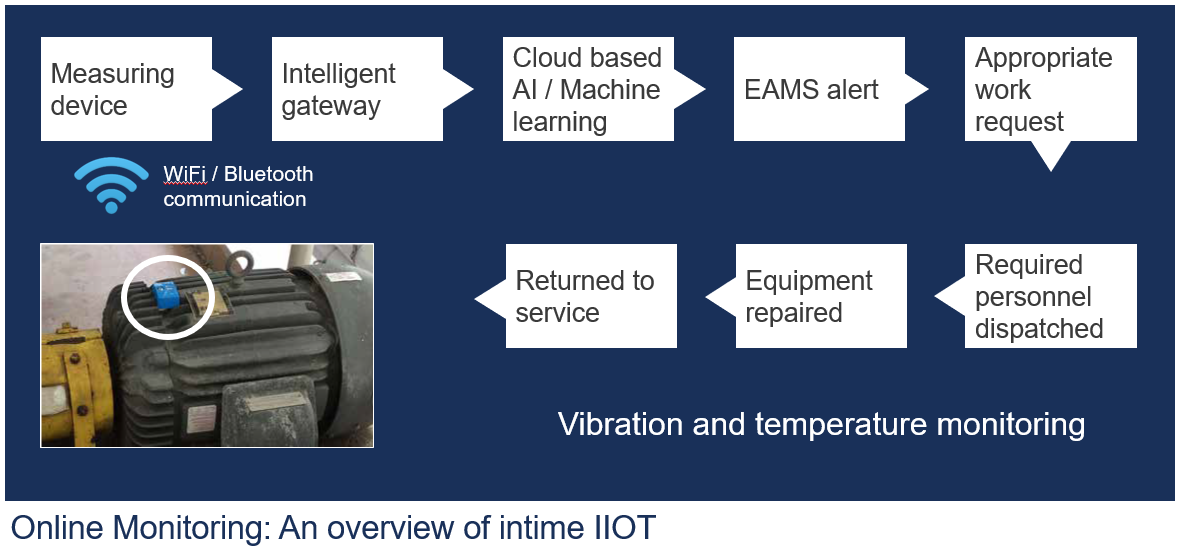
The advent of IIoT is upon us and to remain relevant in this arena we need to consider migrating our condition monitoring technologies to being intime, to remain relevant in this highly competitive global market. We cannot underestimate and consider the impact of what intime condition monitoring can bring to the ROI of our plant, as well as improved workforce efficiency and safety.

Online Monitoring: AN overview of intime IIoT

“We have to look at the optimal state we want our plant to be in – you need to determine your plant’s strategic path,” says conditioning monitoring consultant Tom Dalton. “Our reliability engineers are best equipped to determine the most cost-effective savings – yes – some may take years to realise – but we need to consider the that condition monitoring today is about extracting value, the role of technology and the integration with asset management. They are key to a sustainable benefit for the ROI of your plant and your workforce safety. These are the factors we need to consider in condition monitoring today.”

Statistics referenced/cited in the article
[1] The South African mining sector – Wits University
[2] South Africa: Mining industry fatalities 2020 | Statista

Should Condition-based Maintenance form part of your maintenance programme?

In this day and age, where technology is a great enabler in helping to predict equipment or plant downtime, one would reckon that most asset-intensive companies have condition monitoring as one of the arrows in their tactical maintenance quiver. With condition-based maintenance in place, you get a better understanding of the condition of your equipment which in turn helps you to do the appropriate maintenance when required. The spinoff to this is increased production, improved safety, reduced maintenance costs and failures, a controlled budget and ultimately – longer-lasting assets.

While there is a definite increase in the number of companies using CM technologies and services, we still encounter businesses either with limited /failed or partially implemented CM programmes, or no plan business strategy related to their reliability or condition monitoring programmes. So why then do engineering managers not include condition monitoring in their maintenance and reliability programmes? We’ve found a lack of knowledge and some misconceptions about condition monitoring being the biggest culprits. In this article Gerrit Visagie, Martec Condition Monitoring Consultant will address the issues at hand.

What is condition-based maintenance (CBM)?

Those activities involving continuous or periodic monitoring and diagnosis in order to forecast component degradations so that as-needed, planned maintenance can be performed before equipment failure.

The purpose of CBM as a tactic is to prevent unacceptable consequences by monitoring asset conditions. CBM is predictive in nature with periodic inspections or condition monitoring being carried out to assess the asset condition. If the condition is unacceptable corrective follow-up maintenance is initiated.

CBM is applied when the deterioration in asset health or performance is detectable, or there is adequate warming time to react (PF interval is large enough, HSSE issues are addressed and it is cost-effective).

We suggest two standard tasks to be included in your enterprise asset management system to do inspections and follow-up’s which can be activated based on inspection findings.

When is condition-based maintenance feasible?

We feel you are doing it right when you get the following results:

  • The potential failure mode can be clearly defined and detected.
  • The period from detection to failure (P-F) is fairly constant and predictable.
  • It is practical to monitor at intervals smaller than the P-F interval.
  • The warning level is detected long enough before failure to allow the intervention.

What are some of the most important value-adds of CBM?

  • You can plan and schedule corrective action in good time, which include your spare parts, materials and special resources.
  • You can conduct appropriate maintenance with the right people and at the right time and place.
  • With selected or target maintenance you become more efficient and reduce downtime.
  • You can eliminate defects that would result in failures.
  • With more control over your budget, you stabilise and then start decreasing maintenance costs.
  • Well maintained assets have an increased lifespan.
  • By mitigating breakdowns on certain critical assets, you reduce the risk of collateral asset damages.
  • Decision making becomes easier with better insights available.

How can we calculate the return on investment when implementing condition monitoring?

This is a very important question as it definitely justifies the investment of implementing condition monitoring, CBM and even something like asset health management.

Here is a simple calculation to determine the return on investment:

  • Estimated cost if the asset run to failure = R735 000
  • The actual cost of PDMR (eg. Parts, consumable materials, contractor support, repair shop cost, etc) = R 143325
  • Cost avoidance for this PDMR = R735 000 – R 143325= R591 825

This is an important cost to consider as part of the overall maintenance budget, especially as input into life cycle costing for specific assets of high value and budgeting purposes.

What are the typical technologies or tactics (approaches) used for mechanical equipment?

  • Technologies that are widely used are the following:
  • Vibration monitoring/ Portable and permanent monitoring systems
  • Ultrasound/ Portable and permanent monitoring systems
  • Motor Current Signature Analysis (MCSA)
  • Oil Monitoring (Tribology)
  • Thermography (IR Imaging)
  • NDT (Non-destructive testing)

What steps should be taken to compile an integrated CBM and asset management plan?

Again, one needs to define the goal and endpoint of what you want to achieve.

The philosophy of asset condition monitoring is to watch carefully, determine health status on a continuous or periodic basis, predict future status based on deficiencies found, then maintain or return asset health to normal before complete loss of function.

From my experience and perspective, I would suggest the following steps:

Step 1 | Identify the assets that you want to monitor. Concentrate on assets that are:

  • Criticality – Importance to production and organisational success
  • Costly to repair and replace
  • Not going to be replaced any time soon
  • Reaching the end of life
  • High Failure rate
  • Long replacement lead time

Step 2 | Identify all known and probable failure modes

  • The best way to do this is by performing an RCM analysis and focus on the failure modes that can be managed using CBM strategies.

Step 3 | Select the right CBM solutions and monitoring techniques

  • A condition monitoring technologies road map can help prioritise what to get and can allow for a gradual uptake to assist in change management when implementing new tactics.
  • Choose the correct CBM technology based on the FMEA/RCM Analysis for the specific assets

Step 4 | Define baseline limits for chosen CBM solutions

  • You need to define acceptable condition limits so that the system can warn you when monitored equipment is starting to deteriorate. These limits have to be set in a way that you have enough time to perform corrective actions.

Step 5 | Establish the CBM program

  • Running any maintenance program requires you to define tasks and responsibilities and assign them to your maintenance team. Collecting and recording measurements should be in the centre of your plan.

Step 6 | Analyse the data and act accordingly

  • Analyse the data coming in from sensors and inspections to plot a trend and schedule maintenance work accordingly.

Who oversees this plan?

Ideally, this would be the responsibility of the reliability engineer, manager or technician. It also depends on the availability of competent persons. I have come across many plants with a condition monitoring technician leading the team.

How do CBM and normal scheduled maintenance fit together?

Both are maintenance tactics and they should form part of the same asset management strategy. The structure of the asset management department will determine how these activities are executed, but in general, the person responsible for CBM, usually a reliability engineer, will identify and report the defects and recommendations to the planning department which will, in turn, instruct the maintenance department to go and do the corrective actions. We have encountered tension between the various departments as CM is sometimes perceived as a ‘policing tool’ as it can highlight the absence of maintenance and imply that the maintenance team did not do their work. Companies must invest in training people to understand the value and place of condition monitoring and how it supports their collective efforts to improve the performance of their equipment.

Historically most plants had their own condition monitoring departments, but as with many other special functions, more and more companies tend to outsource this function to a specialist condition monitoring company. In my view, this service provider should become an extension of the asset management team and work towards the same goals as stated in the strategy.

What are the typical misconceptions about condition monitoring?

  • Condition monitoring is expensive – Equipment can be expensive, but part of the strategy can be to appoint a condition monitoring partner to do the work for you. This reduces the need for upfront equipment costs.
  • Condition monitoring is time consuming and a complex task – With the right equipment and experience you can quickly and effectively set up equipment in the database (or on the datalogger itself) and take multiple data points in a matter of minutes.
  • Specialists must gather and analyse data – With some very basic training, a lowered skilled person can gather the correct information and send it to an adequately skilled person or CM partner to analyse, interpret and advise on what to do.
  • Each and every piece of equipment must immediately be included in the CBM programme – Start with a pilot plant and equipment and gradually include more assets from thereon.

To find out how CM has helped companies, you can visit the Martec resource page to browse through our case studies and client reference stories. You can also read our value-adding TechTalks that unpack the different condition monitoring applications and tactics.

Martec’s safe work practices awarded with a NOSA 5-star rating

What we have always professed is now confirmed. Our work practices are extremely safe. In fact, the NOSA 5-star rating acknowledges our efforts as occupational risk management excellence. And what is really great is that the 5-star rating is now aligned with the ISO 45000 Occupational Health and Safety standard. This means that our practices are higher than usually expected from service providers.

“Our clients can be assured that their plants, equipment and most importantly, staff and clients are in safe hands when we come on-site to perform work. We take all the necessary precautions to ensure safe operating conditions before starting the work and then performing the work safely. If any associated safety events or incidents arise while we work, a further risk assessment is conducted and managed according to our safety protocol, and the incident is reported”, says Naldo Bester, National Projects Manager.

What makes our practices so safe?

Firstly, our people and culture. We have a safety culture and a Goal Zero approach to safety incidents. At home and at work, we endeavour to do things safely.

Secondly, our staff’s competence. We make sure that our teams are suitably trained and competent to do their work and understand the risk associated with the tasks they perform. Using our safety management system, we can track if staff is not adhering to safety standards and address this in their training plans.

Lastly, we have a very involved and stringent safety management system in place. It consists of an incident reporting system, the HSSE app, that integrates with our Enterprise Asset Management system, On Key, where incident data is collected, processed, and used to inform our risk assessment. This, in turn, feeds to our management system, where different levels of control reside. Tasks have been configured in On Key to manage and deliver on our statutory compliance controls and legislative requirements. A further part of our management system is our competency matrix, where we define competency requirements for different roles and responsibilities. These requirements are included in job descriptions and reviewed during six monthly development discussions. Relevant courses are bookmarked in their training plans, and their training status is reported back in the management system.

Our eyes are set on ISO 45000 certification

According to Toni de Klerk, Pragma HSSE Manager, the 5-star rating confirms that our management system and work processes are of a very high occupational health and safety standard. It provides a solid foundation for our plan to achieve ISO 45000 certification.

The Pragma group endeavours to lead the way and become the benchmark for safe work performance in the asset management industry.

Real-time monitoring reduces impact of COVID-19

Juan Labuschagne of Martec, the Pragma Group’s condition monitoring company, describes how IIoT (Industrial Internet of Things) technology and the use of smart sensors has helped to optimise on-site maintenance delivery and limit the adverse effects of the COVID-19 Pandemic on plant operations.

Since the arrival of COVID-19 we have experienced immensely negative impacts on our economy and infrastructure. Various industries and sectors have undergone massive operational changes, with the focus on reducing expenditure at the forefront of most management strategies. Companies have been forced to reduce staff either due to financial constraints or the operational risks of spreading the disease.

Compliance with compulsory restrictions or scaling down staff result in various complications as regards the reliability of costly infrastructure: reduced maintenance budgets; reduced maintenance staff and tasks; delays in critical maintenance activities; and limited contractor availability, for example. All these factors significantly increase the risk of failure of plant-critical equipment

To keep unexpected failures to a minimum, planned and scheduled maintenance were traditionally the ultimate strategies. The industry has since moved on, however, and a new ‘predictive maintenance’ strategy is being born, thanks to smart sensors and devices with remote in-time/real-time monitoring capabilities. In this day and age, most software and machinery suppliers provide an open type of architecture to enable the flow of communication and to enable integration with different processes. This new revolution (Industry 4.0) aims at industrial digitalisation and the networking of devices. This allows mass data to be stored so long-term and accurate observations can be accumulated using complex analytical methods.

The ability to use this technology to make informed and accurate decisions during the restrictions of the COVID-19 pandemic resulted in various advantages, such as, reduced staff requirements to carry out physical condition monitoring tasks; effective maintenance planning with contractors and staff; increased production time; increased reliability of plant equipment; and effective resource and material requirements.

As an example, a large mining company was experiencing problems with unexpected failures on its electrical reticulation equipment, especially on medium and high voltage cables and terminations. Unexpected failures, even with only a few hours of downtime, at concentrator plants can result in the loss of millions in revenue. The decision was made to place smart sensors and devices on the cables to monitor partial discharge (PD) activity in real-time.

Partial discharge is an electrical phenomenon that causes deterioration of the electrical characteristics of insulation material within MV and HV equipment. PD activity can be detected using ultra high frequency (UHF) sensors and monitoring devices that collect data and process it so that engineering analysis becomes possible and defects identified. The most significant trends for PD analysis are the intensity of the pulse called the Qmax (mV) and the repetition rate of this pulse per power cycle, called the pulse rate (PPS). When the PPS starts to trend upward, the first alarm is raised and the customer notified. Depending on the type of insulation system and the PD characteristic involved, a decision can be made to inspect the specific equipment for defects or to conduct further advanced online or offline testing to identify the problem.

PD problems can cause massive damage to surrounding equipment such as breakers, panels, transformers and motors, which get damaged due to cable termination failures. This results in considerable amounts of downtime. By applying modern real-time/in-time monitoring and analysis techniques, repairing a problematic termination can take as little as four hours, and this need only affect one specific power feeder to the plant equipment. Substantial revenue savings can result, particularly when taking into account the advantages of a properly planned outage that best suits plant availability.

Regarding the capability of using real-time monitoring, data analysis and trending on an IOT platform, the possibilities are endless. Customers can fully customise the views and alarm limits of any data they want to trend from any type of smart sensor, database or SCADA platform on the plant. Martec’s team of capable individuals and engineers can then analyse any triggered alarms and write informative flash reports to initiate corrective actions.

The IIOT will definitely be part of our ‘new normal’ going forward. The significance of having all the data in real time, with customisable alarm settings, makes every intervention much more accurate and informative, allowing us to better understand trending behaviours and to identify defects quickly and accurately.


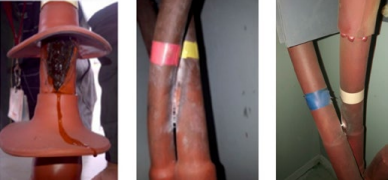
Left: A PD graph on medium voltage (MV) terminations trended over time. The escalation in Qmax (mV) as the resistance of the insulation deteriorates is evident until failure occurs, which trips the supply voltage. Right: Typical partial discharge (PD) failures owing to inadequate clearance between the unscreened areas of the cable termination. PD causes the build-up of a white acid-type powder due to the ionisation of the air around the activity.

This article was first published on MechChem Africa, Sept – Oct 2021 Edition

Asset Health Monitoring

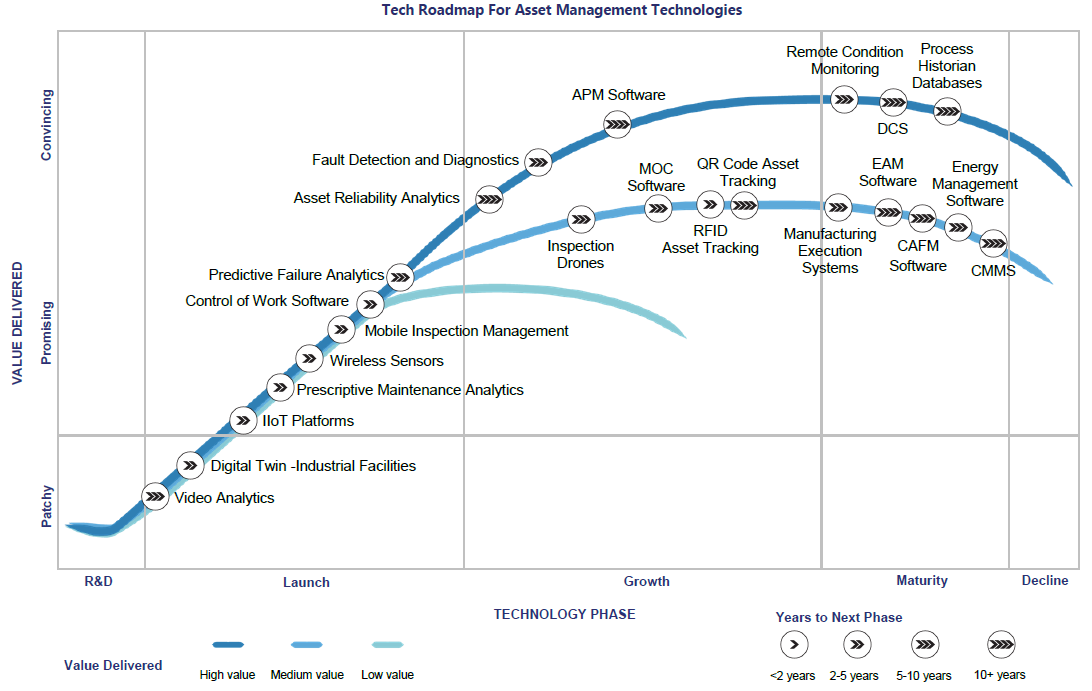
Back in 2019, researchers from Verdantix identified the trends in technology roadmaps for asset management technologies and compiled a helpful graphic to illustrate the value and associated growth of these technologies. Of interest to us at the time was the rapid growth and high value associated with Asset Reliability Analytics, Fault Detection and Diagnostics and Asset Performance Management software. Even more exciting was the high value related to Remote Condition Monitoring technologies that started reaching maturity.

Timely technologies for a global pandemic

Speed on to July 2021, and we realise just how timely these technologies were to help mitigate health risks and save critical assets and companies alike. The continued disruption of business operations caused by the Covid-19 pandemic has globally expedited the need for digitalised and remotely managed business processes and assets, especially in the maintenance management arena.

The realities of in-person transmission of the virus and health protocols to keep people away from each other and from high touch points begs for the implementation of alternative solutions to monitor the reliability, performance and health of assets, especially those critical to the continued operation of businesses.

Technologies and your asset care plans

With constrained resource movement and availability, time is of the essence.

Monitoring and predicting the potential failure of an asset remotely, builds in a buffer to action cost-effective, controlled and timely preventive actions and avoid breakdowns of assets, such as standby generators, not performing when suddenly required to do so.

Your digitalisation strategy and technology roadmap ties in with your asset management strategy and asset care plans. You require a clear understanding of the criticality of each asset and its associated function, its failure modes and the effect on your operation. This information will help you determine the best maintenance tactics of which the rise of predictive maintenance are emphasised in the Verdantix report. Technologies enabling predictive failure detection are of high value and are a driving force changing the maintenance and reliability landscape. Not only do these technologies offer you the capability of 24/7 real-time online access to monitor the health of your equipment and to receive timely warnings before potential failures. These systems should also triggers the selected corrective maintenance tasks and get your maintenance teams working on the problem before you even know of it.

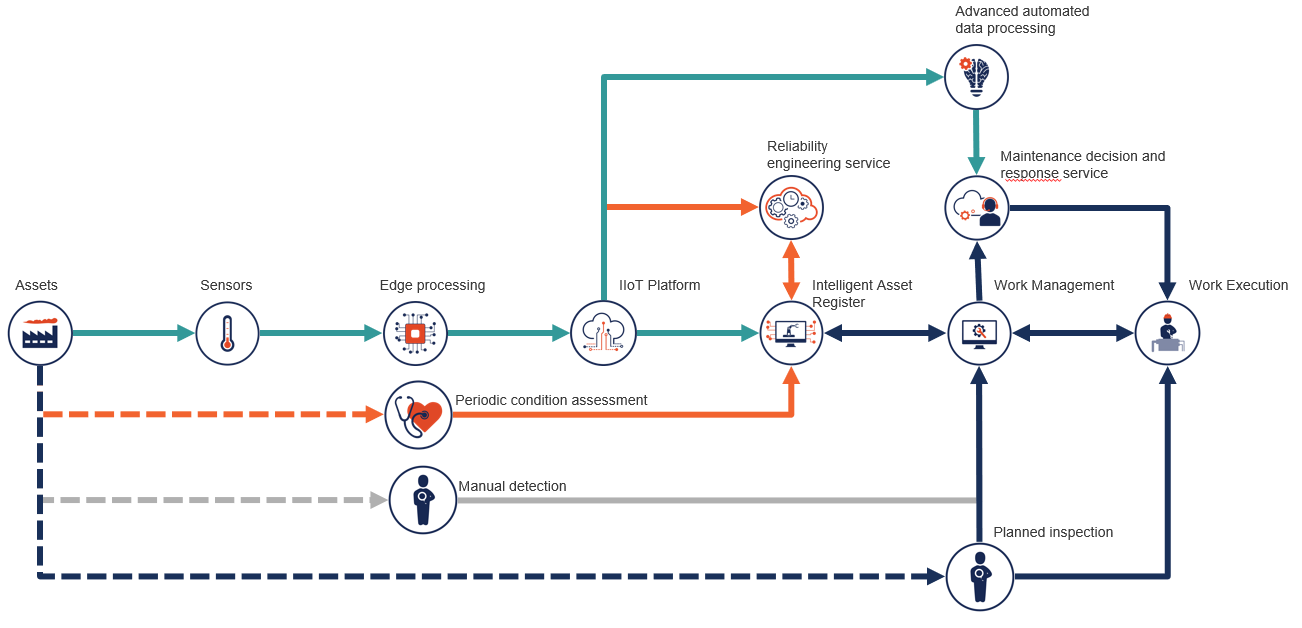
Visualising your asset management processes can also help determine how to deploy technologies in your operation. Below is a simple diagram depicting various scenarios from a planned inspection to a manual detection, periodic condition assessment, an IIoT enabled condition monitoring value chain, along with how each one feeds into the work or maintenance management process.

A holistic approach to condition monitoring technologies and sensors

The growing scope and availability of predictive condition monitoring technologies and sensors has given many companies a way to convert their assets to “smart assets” and adapt their maintenance processes and tasks with the enriched information derived from data provided by these smart assets.

We found that the success of the use of technologies hinges on a holistic approach.

Individual technologies as such aren’t the silver bullet, but correctly scoping the stack of correct measurement and assessment technologies that provide the required information should be used in combination with the required expertise to analyse the data and tweak the frequency of asset monitoring.

Randomly selecting technologies proves to be costly. It would be best to consider the technologies you already have and the interfaces or integrations required to develop the most practical and sustainable system landscape for your needs. If you are concerned about the needed investment, a technology roadmap can help with a cost-effective approach that can be expanded. The importance of a use case should also not be underestimated as it can help validate the return on your investment before you commit to the costs.

An example of a technology roadmap can be found here. It depicts a systematic approach to a holistic solution for organisations, both big and small.

The value of in-time asset health monitoring and analysis

In-time monitoring and analysis provide reliability and maintenance engineers access to visualised real-time data dashboards, which provide them with information about an asset’s health status and its associated risk levels. These solutions typically use engineered algorithms for predictive analytics, which gives reliability engineers a better sense of the overall status of asset or equipment reliability, but it also enables them to make better decisions to increase this reliability and overall integrity of a plant asset-dependent organisation.

In-time monitoring and analysis also enable local and remote monitoring and support to allow for the most efficient decision-making when coupled with in-depth analysis and expert advice on corrective actions to maintain uptime and increase asset or equipment longevity.

The digital twin

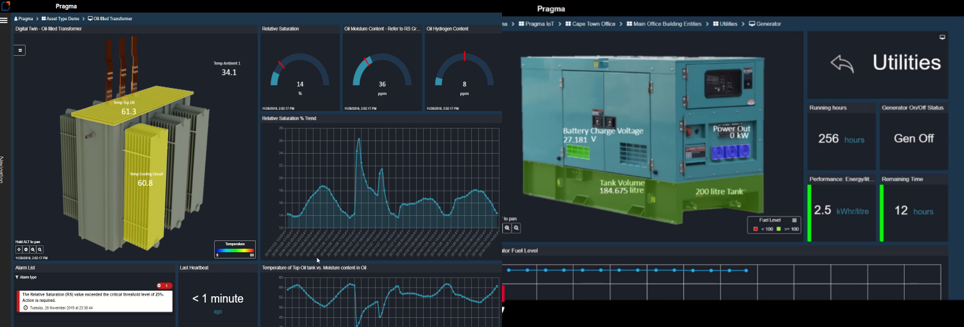
A step up from basic condition monitoring is asset digitisation, which allows for the development of digital twins with the visualisation of the asset’s condition and its associated process parameters in real-time. Alarms and notifications can be triggered to warn of any asset anomalies and ultimately prevent asset downtime. Where this is coupled with an automated work management process where work orders are created based on the anomalies identified, you have predictive maintenance without any human intervention.

Imagine the transparency this will achieve for the state of your critical assets. You will be able to track utilities, like water and energy usage or the fuel levels of your standby generator, which is a highly critical asset in the South African context, given load shedding. You will understand exactly what is happening inside your oil-filled transformer, and you will be able to make decisions that will help you significantly reduce costs, the risk of failure, downtime and even the impact on the environment. Digital twins help to ensure a more reliable and optimal performing asset-intensive organisation or any small business for that matter. The power of having access to live information and a built-up history of asset information or failure trends enables predictive responses to reliability-centred maintenance. It provides peace of mind to asset and business owners.

Agility – the core of the smart organisation

But perhaps the most important tool one can have is agility, to be able to respond quickly and efficiently to manage our assets better. Predictive maintenance enables this, avoiding or reducing downtime and ultimately ensuring that expensive repairs and maintenance work are either avoided or planned accordingly. Maintenance readiness is also vital, taking into consideration a whole lifecycle asset management approach. Agility is also our ability to think and understand quickly. We must process all the information we are bombarded with as quickly as possible, and importantly, extract what will add value to our respective organisations or businesses.

In closing, just as it is important to monitor one’s heart rate regularly and respond to anomalies, asset health monitoring is literally having your finger on the pulse, enabling informed and predictive decision-making. It is vital that organisations or businesses in South Africa start developing a digitisation roadmap and gradually commence on a journey to sound and sustainable asset management reliant on intelligent assets and smart asset owners.

First published Pragma website.

Martec strengthens its specialist team with additional mechanical condition monitoring expertise

Mechanical Generation Equipment

As part of an expansion drive to further secure their position as a leading provider of a comprehensive range of condition monitoring solutions and products, Martec recently incorporated IDEAS Solutions.

IDEAS is especially well suited to dealing with mechanical condition monitoring needs ranging from sensor technology and field service all the way to training. Heading up this team operationally, and co-founder of IDEAS, is Kobus van der Westhuizen, a mechanical equipment condition monitoring expert who has joined the Martec team as part of the incorporation.

Kobus brings with him a host of specialist product knowledge, technologies and depth of experience. In addition to Martec’s already attractive range of products, clients will gain access to and support on the ACOEM OneProd range, including the FALCON vibration analyser and balancer, EAGLE wireless online sensor system, and the MVX, MVX-120 and KITE wired online monitoring systems. These are all run by the NEST suite of software. Also available are solutions for laser alignment in the FIXTURLASER range of products and a broader training offering that includes mechanical condition monitoring courses such as vibration analysis and laser alignment training.

Kobus says, “At Martec we take a holistic approach to condition monitoring by applying the correct measurement and assessment technology and combining it with the optimal frequency of asset monitoring based on a detailed FMECA (Failure Mode and Effects Criticality Analysis). This approach contributes greatly to increased bottom-line earnings as a result of engineered condition monitoring, providing clients with peace of mind about their assets.”

Martec now also stock and distribute Connection Technology Center, Inc (CTC) products and technology which includes a wide variety of high-quality accelerometers, vibration sensors’ cables and connectors for industrial use in condition monitoring and predictive maintenance applications.

Johannes Coetzee, MD of Martec, says, “We listened to our clients. Over the years Martec has proven its position as the market leader in condition monitoring of key electrical assets. Our clients wanted Martec to offer the same expertise for their critical mechanical assets, and now we have ensured that Martec is a true one-stop shop for anything condition monitoring related. We have integrated condition monitoring on critical mechanical and electrical assets into a seamless product that covers consulting, sensor technology, real-time monitoring (IoT web solutions), field service support and training.”

Condition monitoring is in a phase of rapid technological advancement and with a vast number of companies realising the value of predictive and preventive maintenance, the demand for condition monitoring is on the increase. Condition monitoring identifies hidden defects in equipment to improve the reliability of critical assets and foretell anomalies that might lead to breakdowns. It uncovers the exact causes of failure and guides the most effective corrective action.

In today’s economic environment where clients have constrained resources of cash and skills, it is very important to be able to prioritise asset-related risk based on the best possible predictive information and so utilise these resources where they will have the greatest impact. This allows businesses to mitigate risks, increase efficiencies and save costs.

On-line monitoring of HV substation equipment: Myths and truths

Brian D. Sparling, Senior Member of IEEE, and Regional Manager with Dynamic Ratings Inc. 

The challenges facing substation owners and operators for the past years are unrelenting and are summed up in one sentence: “Reduce operating costs, enhance the availability of the generating and transmission equipment, and improve the supply of power and service to the customer base.” All this, in an environment where the available resources are inexorably decreasing and the pressure from the shareholders and the competition mount steadily. Critical oil-filled electrical equipment, such as transformers, shunt reactors, current transformers, circuit breakers and bushings, are key elements of an electrical power system. The reliable and continued performance is the key to profitable generation and transmission of power. The early detection of incipient faults in these assets can create economic benefits that have a measurable impact on the results required to meet these formidable challenges.

Thus continuous on-line monitoring Intelligent Electronic Devices (IEDs) have become commonplace and, with improvements in sensor technology and with built-in intelligence, have demonstrated their ability to meet the challenges. However, there are still some myths and misunderstandings surrounding the application of and benefits to be gained with these devices. These need to be brought out and discussed. During my twenty-plus years in this field, there persist what I call myths surrounding the use and at times misuse of these IEDs. In this article, I will try to bring out the most frequent of these myths.

Myth: If I use these IEDs, it will prevent the failure of my transformer or circuit breaker.

False
The truth is, if a piece of equipment is on its way to a failure, and nothing is in place to advise the owner of its imminent failure, then it will fail. There are of course protection devices (so-called transformer protection relays, etc.) to advise the owner of its failure (or failure to perform its function). These devices do nothing to protect or save the equipment. Their sole purpose is to remove that piece of equipment as quickly as possible from the system to avoid system problems. In other words, they are system protection relays and are not designed to protect the transformer.

A properly selected and applied monitoring IED is there to provide the early warning of a developing fault within the equipment. The warning to the owner is there to initiate some investigation and corrective action. One of the primary reasons for the use of the IED(s) is to reduce the risk of unexpected failure, not to stop a failure from occurring.
Another truth: These IEDs can and do provide early warning of symptoms of a potential defect, but the transformer failed anyway, occasionally catastrophically. This has happened more than once. The primary reason is that the system was not connected to an alarm annunciator, or into an RTU, because the job (installation and commissioning) was, in my words, NOT completed. By NOT completed I mean that no means of communications were connected to (at a minimum) the relay alarm outputs, or via Serial or Ethernet communications networks to some device to pass on the alarms. Speaking of alarms, another failing to complete the job item is training of the operators, or others to be able to respond to the alarm. These systems will deliver “new types” of alarms that some operators have never been trained in, i.e. how to respond to alarms they have not seen before. Some deeper understanding of the alarm and the consequences of ignoring these alarms must be communicated to those who are responsible.

Table 1 presents an example of such an alarm statement, with a recommendation of next steps, to ultimately making an informed decision. These two are only the beginning; a listing of ALL possible alarms needs to be defined and operators trained.

Myth: If I use these IEDs on my equipment, they will advise me of ANY defect or malfunction of that equipment.

False
The truth is, primary equipment has many failure modes and a good many are VISUAL. When performing an FMEA (failure modes and effect analysis), and all possible failure modes are listed, then lined up with technology and/or methods that can be used to detect the symptoms of those failure conditions, I have found that between 30 % and 40 % of failure modes are VISUAL in nature.

Table 1. Example of alarm statements, with recommendations of next steps necessary for making informed decisions

   Alarm condition    Diagnostic    Prognostic    Recommendations
  •  Top oil temperature Alarm 1st  Level; and loading above maximum nominal rating.
  • The transformer oil is currently operating at a temperature above the first level of alarm setting.
  • This is apparently caused by the high load currently applied.
  • If this condition is maintained for several weeks, it could result in accelerated oil ageing.
  • Make sure the cooling system is fully operational.
  • Check ambient temperature
  • Evaluate acceptable load with regard to ambient temperature.
  • Consider reducing load.
  • HI DGA Alarm 1st Level
The DGA Monitor HI relay has been triggered because of one of the following:

  • High alarm settings have been exceeded: gas level, hourly trend or daily trend.
  • A “DGA” alarm is indicative of a fault condition developing in the transformer. If unattended, the transformer may develop a “Gas High-High” alarm.
  • Take an oil sample for full DGA analysis to confirm alarm condition.
  • Check the history of DGA IED trending.
  • Search for correlation of DGA IED history against loading and OLTC tap changer position.

Continue reading →

End-to-end monitoring systems feeds situational awareness

Brian D. Sparling, Senior Member of IEEE, and Regional Manager with Dynamic Ratings Inc.

Historically, substation assets have been loaded beyond nameplate ratings and the need to accommodate these emergencies or contingency, conditions are best served using End-to-End electrical apparatus monitoring systems.

For many years the limit for normal apparatus loading was based on the maximum nameplate rating or an arbitrarily set value, called ‘the red line’. On-line monitoring of power transformers and circuit breakers for condition assessment has gained popularity over the past twenty-five years, the typical technology adoption period, from concept to commercial reality in the electric utility industry.

What are the benefits of implementing End-to-End monitoring of power transformers and circuit breakers?

  • Provides Situational Awareness of electrical assets operating closer to their capacity without compromising safety or reliability.
  • Fully optimize real-time substation loading/overloading based on actual site conditions, including asset condition or operating modes.
  • Assist in making intelligent decisions about load management based on actual circumstances.
  • Forecast (predict) operating conditions used to facilitate condition-based maintenance (CBM) programs or agency reporting (such as environmental reporting of SF6 release).
  • Collect operational and accumulated loss of life data to enable estimation of the residual.

Loading Management

Today’s sophisticated monitoring solutions continuously calculate the maximum safe load capability of the assets and display (locally or via embedded web servers) and communicate with other systems and SCADA. Until recently, the operation of electrical apparatus would fit into one of the following loading categories: Continuous Load or Cyclical Load.

Continuous Load

This is the constant loading at rated nameplate output in (MVA) when the apparatus is operated under a constant 20°C ambient condition. Of course, this loading condition rarely happens over the life of a transformer, where both load and ambient temperature vary over time.

Cyclical Load

This loading implies a cyclical load at a normal constant ambient (30°C) where the hottest-spot conductor temperature varies as the load cycles above and below the nameplate MVA of the apparatus. From the thermal ageing standpoint, this cycle is equivalent to the case of rated constant load at normal ambient temperature (30°C).

Overloading Apparatus

The consequences of loading apparatus beyond its nameplate rating are as follows:

  • The temperatures of the windings, cleats, leads, insulation and oil will increase, accelerating insulation consumption.
  • The core leakage flux increases, causing additional eddy-current heating in metallic parts.
  • As the temperature changes, the moisture and gas content in the apparatus changes. If SF6 gas or oil is leaking to the environment, moisture is entering. This gas loss can significantly alter a circuit breakers performance and gas leaks often must be recorded and reported. Moisture in electrical apparatus accelerates condition deterioration.
  • Bushings, On-Load Tap-Changers, cable-end connections and current transformers will also be exposed to higher stresses, encroaching upon their design and application margins.
  • Detection of restrikes on breakers plus, knowledge of trip timing, clearing time, and arc duration, can provide the triggers for CBM (Condition Based Maintenance).

The size or criticality of the unit is no longer

  • the deciding factor for on-line monitoring as
  • the cost of deployment is minimal and the
  • tangible benefits related to monitoring far outweigh the cost.

Long-time Emergency Loading

Long-term emergency loading of transformers occurs and may persist for extended periods. This can lead to significantly increased ageing of the solid insulation system.

  • Deterioration of the mechanical properties of the conductor insulation will accelerate at higher temperatures. This ageing acceleration is also impacted by the moisture content of the conductor insulation. Taken together, it is an exponential function in terms of ageing rate of the transformer solid and liquid insulation. It will reduce the effective life of the asset.
  • Cooling system is operating for extended periods, increasing maintenance and reducing life expectancy.
  • Contact resistance of the breaker and/or OLTC will increase at elevated currents and temperatures and in extreme cases, thermal runaway could occur.
  • Gasket materials may become more brittle because of elevated temperatures.

Short-time Emergency Loading

Short-time increased loading can result in an increased risk of a system failure. However, acceptance of this risk for a short time may be preferable to the loss of supply.
Note: The permissible duration (typically) of this load is shorter than the thermal time constant of the whole transformer and depends on the operating temperatures before the increase in loading.

  • The main risk for short-term failures is the reduction in the dielectric strength due to the possible presence of gas (water vapour) bubbles in the regions of high electrical stress, (leads and windings).
  • These bubbles are likely to occur when winding hot-spot temperature exceeds 140°C for a transformer with winding insulation moisture content of 2.5% or more. This critical temperature will decrease as the moisture concentration (in the winding insulation) increases. Oil expansion could cause an overflow in the conservator.

End-to-end Performance

The benefits of on-line monitoring have primarily accrued to reduce maintenance costs and overall improvement in T&D system reliability. The prospect of using on-line monitoring to make intelligent decisions on how to optimize the load on such important substation assets follows the adoption of load management technology for power equipment such as oil-filled transformers and oil or gas-filled circuit breakers.

The use of on-line monitoring systems as controlling devices, such as the cooling system on transformers providing communications with external networks, enables the system to be integrated in the transformer control system resulting in minimal incremental cost to implement. The additional information gathered on the asset greatly offsets this cost. The size or criticality of the unit is no longer the deciding factor for on-line monitoring as the cost of deployment is minimal and the tangible benefits related to monitoring far outweigh the cost. Clearly, sustaining electrical apparatus operation and uptime, reliable operations and increased asset life are the benefits of continuous monitoring systems.

Technology solutions are essential for communications to connect devices installed on-field assets to communicate to networks via substation control rooms. One suitable technology is the powerline communications system (iBridge), which provides high- speed, encrypted communications over existing cables. The iBridge system is substation hardened, designed to perform in high EMC environments, available as point-to-point or point-to-multipoint, protocol-independent with the rapid installation time and suitable for existing or new substation installations.
The cost of deploying such systems is non-recurrent, totally flexible and extremely competitive with fibre or wireless systems. The encryption level ensures full security of data.
On-line monitoring of power transformers and circuit breakers in a substation, with communications to SCADA and engineering networks, is mature technology suited for new installations as well as retrofitting to existing assets. The future is here and available for all asset classes, with the objectives of understanding Situational Awareness of the equipment and its ‘reliability, whilst minimizing operational expenditure.

This article was first published on Electricity Today.

Future of substation monitoring: It is not just the software

Brian D. Sparling, Senior Member of IEEE, and Regional Manager with Dynamic Ratings Inc. 

The future of online monitoring of high voltage substation equipment is closely linked to enterprise asset management systems provided that proper measures are implemented for the EAM system to deliver the expected results. Those measures include trained personnel, detailed knowledge of one’s assets, technically and economically feasible maintenance process, the flow of information to personnel, and collaboration with a company that can provide the monitoring system as well as the expertise in its implementation. Monitoring and diagnostics are now part of the business process which contributes to a reduction in forced outages and a more secure and reliable system.

Introduction

I am an avid follower of various LinkedIn groups and have recently read with interest items from two diverse and separate groups, which, on the surface, appeared to have no connection with each other. One was from the Transformer Condition Monitoring group, asking the question “Is there a future for transformer monitoring and why/why not?”. I would refer the questioner to review my article published a year ago in Transformers Magazine for some of the answers.

Another item from the IAM Discussion group highlighted the author’s enterprise asset management predictions for 2018. I did touch on this topic of asset management in my previous article, yet found that this item provided more focus on why many of the systems fail to deliver on what the asset owner thought they had signed up for. In my mind, these two are connected. The future of substation monitoring is closely linked to the latest in buzz words or phrases such as Internet of Things (IoT ) and EAM. Full disclosure: I work for a company that engineers, produces, and provides engineering services to those companies owning and operating HV assets on the power system. We also produce asset analytics for those very same assets monitored.

Terrence O’Hanlon, CEO at Reliabilityweb.com, has noted what his company sees daily, not necessarily with electrical energy companies, but their observations carry over:

  • a reminder that 80 % of the people who care about EAM and read this cannot access their work orders on a mobile device,
  • only 40 % of the organisations they studied have an actionable EAM based asset registry,
  • only 30 % of the organisations they studied have accurate and up to date asset criticality rankings.

Mr. O’Hanlon in his post predicts the following:

  1. Without an engaged and empowered workforce, EAM will still fail to create a positive return on investment.
  2. Without knowing what assets, you have, EAM will still fail to create a positive return on investment.
  3. Without a technically and economically feasible maintenance process (such as CBM), EAM will still fail to create a positive return on investment – no matter how much IoT you implement.
  4. Without adequate and ongoing EAM training, EAM will still fail to create a positive return on investment.
  5. Without active executive sponsorship, EAM will still fail to create a positive return on investment.

I will add another prediction: A failure to communicate – unique to utilities with remote substations, some located in geographically difficult to reach areas, either in terms of distance (hundreds of kilometers away from operational centres), or in times of extreme or even normal weather conditions (winter), which makes getting to the sites at times hazardous. Many who buy and install monitoring systems have not implemented the items necessary to take advantage of the data and information available for an EAM system. This can lead them to failure to create a positive return on investment (ROI).

Communications

Communication is extremely important and is a requirement that must be included in the scope of the plan. Without a means of notifying those who need to know (maintenance, operations, etc.) there is no point to installing a monitor, and just to allow it to be an ‘island of information’. Those who have been successful and have had proven ROI have engineered their ‘systems’ to include the pathway for all this non-operational data/information and alarms through a parallel communication channel, separate from the SCADA (or operational data) path. They may both use the same ‘pipe’ to transport the data, but each is secure from one another. Once back in a secure data historian with supporting applications, including the EAM, access to the information can be provided to maintenance personnel to carry out CBM activities, to operations personnel to have an awareness of the operating status, and to asset management personnel to develop their asset replacement strategies. Examples of this ‘failure to communicate’ include a bushing failing and taking the transformer with it, all due to the failure of the personnel to connect the alarm relays on the monitor to SCADA, RTU or annunciators. The operators had no indication of a failure condition in progress until it was too late.

What to do?

These observations can be used as a benchmark for HV equipment owners to act on. There may be logical and/or regulatory reasons why some of these items cannot become mobile, but technically speaking, there are no large hurdles. It is a process. Defining the problems and issues is the first step that can be answered by these five questions:

Why?
Why do we want to start online monitoring? Define in words why you want to move in this direction. Many of the common reasons are:

  • Reducing the risk of unexpected failures
  • Moving to condition-based maintenance from time-based maintenance
  • Safety for workers and the public
  • Less driving to remote sites, and sending the right team to the site
  • Situational awareness of a unit’s condition before entering near the unit
  • Extending the remaining useful life of units in service
  • Capital deferment, cost savings on buying new equipment

Who?
Who will benefit from such a program? Define who and obtain their support for this move.

Who are the stakeholders:

  • Maintenance groups – early warning of incipient defects
  • Operations groups – situational awareness, how much load can this unit sustain, and for how long?
  • Assessment management – understanding ‘risky’ units, plan for replacement
  • Standards – writing specifications for new units, based on experiences of units in service

What?
What to monitor depends a great deal on the answer to the first question of “Why”. Some examples as identified through Failure Modes and Effects Analysis (FMEA) are:

  • A vintage of bushings or on-load tap-changer (make, type), have over time had an increasing failure rate due to many reasons, aged gaskets, latent design/manufacturing defects.
  • Defective ancillary devices, such as OTI and/or WTIs, have degraded over time and are no longer working/or out of calibration.
  • Older units may be experiencing increased loading over time. The question becomes: can we keep increasing the load safely or is it time to plan a replacement?

Where?
Where to monitor depends a great deal on the answer to the questions of “Why” and “Who”, as well as input from operations load dispatch and asset management.
Some examples include:

  • Critical loads served, government buildings, hospitals, heavy use of industrial loads (continuous processes);
  • Increasing maintenance usually indicates units with either acute or critical deficiencies, and need extra intensive attention, before replacement.
  • Generating facilities, with few or no spares, to replace units that unexpectedly fail. Lack of Generator Step-up (GSU) transformer = no revenue!

Who?
Who is going to be the champion or the ‘owner’ of the team and overall monitoring systems?

  • This is a very important position and one that deserves a full-time commitment, not only to build the system but to have the support of the management to build the resources necessary for it to be a success!
  • Without a passionate owner or champion of the dedicated team, it is doomed to failure.

The answers to these questions often overlook some critical and necessary elements such as training of personnel.

Training of personnel

Learning from others’ experiences, both good and bad, teaches us a lot about this new and modern approach to monitoring fleets of high voltage substation equipment.

Training needs to include not only the technology and its benefits but also training for operators and maintenance personnel on the new systems and the data/information available. There will be new sets of alarms that they have never encountered before, and many may not know how to respond. Developing an updated alarm response procedure is necessary to provide understanding to critical situations. The concept is to present the alarm(s) condition, transfer knowledge about the nature of the alarm, inform the reader what the consequences of ignoring the alarms may be, and provide recommendations to assist in decision making.

Who can help me? This is all rather new to me.

It is very important for the asset owner to work with a company that has demonstrated with other assets owners their capability not only to supply the ‘boxes’ that may be installed on the equipment but also have the expertise to understand the issues that will be unique to each situation (and substation), where this program needs to be implemented.

This company needs to be able to handle, from a project management point of view, all the requirements and inputs from operations, maintenance, asset management, and the IT departments, as well as the communications systems involved. Not all suppliers of the ‘boxes’ and/or EAM systems have that capability, nor domain knowledge of substation assets, to understand the unique applications involved.
In other words, ensuring measurements made on a piece of equipment are translated into actionable information, and delivered in a meaningful way to those who can then act on it, can be obtained by working with a proven supplier of not just a series of boxes and widgets, but one that has demonstrated that they can provide the systems you want, interfaced the way they want, that will seamlessly present the data where you want it.

Monitoring and diagnostics is now part of the business process

Those utilities that have demonstrated that this process provides a tangible benefit to their business understand that this is now becoming a key part of the other business processes any energy company has, such as HR, finance, and operations, to name a few.
It is one of the core competencies of their company that contributes not only to the bottom line, but also to an increased awareness of the worker and public safety, reduction in forced outages, and a more secure and reliable system which enhances customer satisfaction.
The EAM software developed for HV substation assets will deliver the expected benefits, provided the business owners provide the resources, both financial and structural, including a team dedicated to making it work, and has the plan to make it happen.

Bibliography

  1. B. Sparling, Online monitoring of HV substation assets: Myths and truths, Transformers Magazine, Volume 4, Issue 2, April 2017
  2. Terrence O’Hanlon, Top 5 Enterprise Asset Management (EAM) Predictions 2018, https://www.linkedin.com/pulse/top-5-enterprise-asset-managementeam-predictions-2018-ohanlon/ current January 4, 2018

This article was first published on Transformers Magazine Vol. 5 Issues 2

    How did you hear about us?